

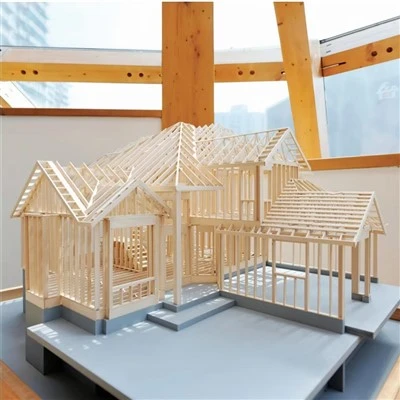
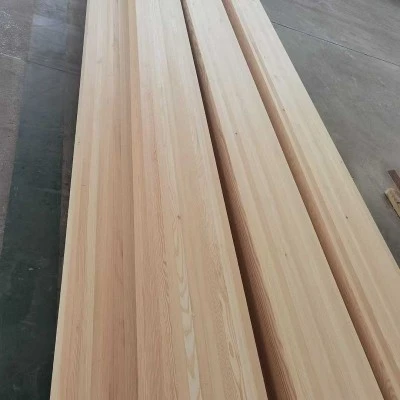


The working principle of large-scale timber structural members lies primarily in their collaborative load-bearing behavior. When the building is subjected to its own weight, roof loads, and operational loads, these forces are transmitted downward from the superstructure along specific paths. Typically, roof loads first act upon the purlins, are then transferred to members such as beams and tie-beams, and finally reach the foundation and subsoil via the columns. Throughout this process, timber members of varying specifications and forms perform distinct structural roles; by working in concert, they form a cohesive load-transfer system that ensures the building's functional integrity.
Large timber components are typically assembled using traditional joinery techniques-such as mortise-and-tenon joints and lapped connections-which allow the assembly to maintain structural unity while retaining a degree of flexibility for deformation and adjustment. When the structure is subjected to vertical loads or horizontal forces, beam-column joints experience corresponding compressive forces, shear forces, and bending moments, with the various members sharing the load through their interactions at these junctions. Timber possesses inherent elasticity and toughness, allowing for controlled deformation under external force; the coordinated action of the members dissipates and distributes a portion of the external force, thereby enhancing the structure's stability.
Large-scale timber structures do not rely on individual members to bear loads in isolation; instead, they function as a spatial system comprising beams, columns, purlins, and tie-beams working in unison. Columns primarily bear vertical compressive loads; beams and tie-beams handle bending and load transfer; and purlins convey roof loads to the underlying framework. When external loads fluctuate, individual members adjust according to their specific structural characteristics, transferring forces to adjacent components through their joints. Consequently, the operational nature of large-scale timber structures can be summarized as "hierarchical load transfer, collaborative load-bearing, and holistic stability"-factors that are crucial to the enduring stability of traditional timber structures.