
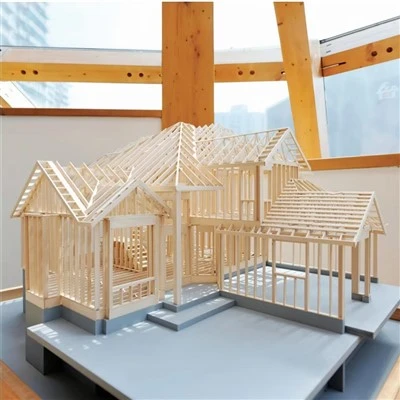
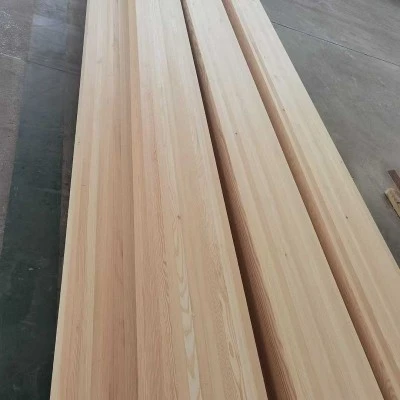

The strength of large timber structural members primarily refers to their capacity to withstand external loads without structural failure. In timber architecture, components such as beams, columns, and purlins are subjected to various forces-including compression, tension, bending moments, and shear forces-necessitating specific strength characteristics for each. Columns primarily bear vertical compressive loads and thus require high compressive strength, whereas beams and purlins are prone to bending stresses and require high flexural strength. As timber is an inherently anisotropic material-exhibiting superior mechanical properties parallel to the grain compared to perpendicular to it-the relationship between grain orientation, cross-sectional dimensions, and the direction of applied forces must be carefully considered during the fabrication and application of large timber members.
Stiffness reflects the ability of large timber structural members to resist deformation. In practice, even if a member does not reach its ultimate strength limit, excessive deformation can compromise the building's functionality and overall stability. For instance, beams may undergo deflection under sustained roof loads, and columns may experience some degree of deformation under compression. Consequently, design and construction must address not only load-bearing capacity but also the control of deformation. Factors such as cross-sectional dimensions, span, the timber's modulus of elasticity, and the performance of connections all influence structural stiffness; appropriate member sizing and connection detailing can effectively enhance overall rigidity.
The strength and stiffness of large timber members are also influenced by the quality of the timber itself and the service environment. Mechanical properties are altered to varying degrees by factors such as wood species, moisture content, and defects like knots or cracks; furthermore, prolonged exposure to moisture, temperature fluctuations, or insect infestation can lead to material degradation. Therefore, the selection and processing of large timber members should prioritize high-quality timber with uniform texture and minimal defects, while cross-sections and connection methods should be determined based on actual loading conditions. For large timber members in traditional buildings, assessments must also incorporate on-site inspections and evaluations of existing damage to ensure the structure maintains adequate strength and stiffness.