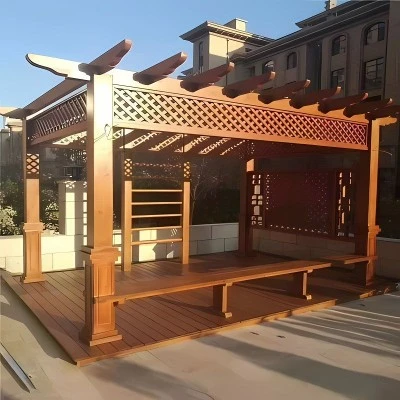
The production of interior woodwork begins with the selection and treatment of raw materials. Suitable timber or engineered wood panels are chosen based on the product's intended use and design specifications, followed by inspections of moisture content, dimensions, and surface quality. Natural timber typically undergoes a drying process prior to machining to bring its moisture content within the range suitable for indoor use, thereby minimizing the risk of future warping or cracking. For engineered wood panels, checks regarding thickness, flatness, and surface quality are conducted to ensure compliance with production standards. Once materials pass inspection, layout and cutting are carried out according to the design drawings.
Following the cutting stage, the material enters the mechanical processing phase, which encompasses operations such as sawing, planing, milling, drilling, and grooving. Different wood products require specific machining methods; for instance, cabinet panels demand precise cutting and hole placement, while wooden doors and furniture components require the machining of tenons, mortises, or mounting holes based on the intended joinery method. Strict control over component dimensions and precision is essential during processing to prevent excessive errors from compromising subsequent assembly. For products with complex shapes, CNC equipment is employed to enhance processing efficiency and dimensional accuracy.
After the individual components are machined, the assembly and joining process takes place. Depending on the product structure, various methods-such as mortise-and-tenon joinery, gluing, screws, and hardware connectors-are used to assemble the components. During assembly, the dimensional relationships and the integrity of the joints are verified, and any deviations are promptly corrected. Products such as cabinets, furniture, and wooden doors undergo final alignment to ensure flatness, verticality, and stability upon installation. Some products may require edge banding or preliminary surface treatment prior to assembly to improve processing efficiency and the final aesthetic outcome.