

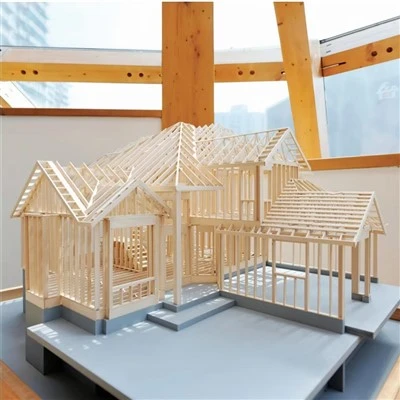

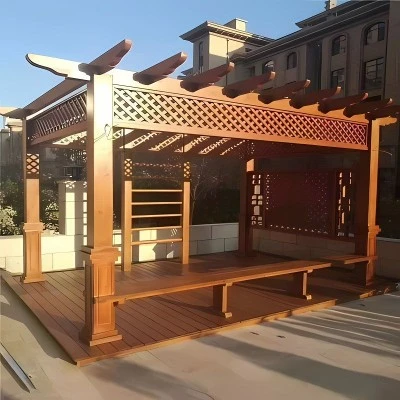
Outdoor structures refer to facilities and constructions built within outdoor spaces to meet specific functional or environmental needs. Compared to full-scale buildings, these structures are typically smaller in scale and serve specific purposes-such as providing shade or shelter from rain, offering places for rest or passage, facilitating viewing, and defining spatial boundaries. Common examples include pavilions, pergolas, trellises, viewing platforms, seating, railings, and various landscape features. Although modest in size, these facilities offer practical value and play a significant role in organizing space within public areas and landscape environments.
Landscape is a composite spatial form shaped by the interplay of natural and man-made environments; it encompasses natural elements-such as topography, water bodies, and vegetation-alongside artificial components like roads, buildings, structures, and landscape facilities. Landscape design goes beyond mere site beautification; it involves the rational organization of spatial elements to enhance environmental quality and accommodate human activities. In settings such as parks, plazas, courtyards, and waterfronts, landscape design must balance ecological, functional, and visual considerations to foster a harmonious relationship between people and the natural environment.
Regarding the relationship between the two, outdoor structures are integral components of the landscape and serve as a bridge connecting architectural spaces with the natural environment. Through their scale, form, materials, and placement, these structures help organize the landscape, providing venues for rest, social interaction, and activity while shaping the visual character of the space. Consequently, the design of outdoor structures requires a holistic approach that considers the site context, intended function, structural safety, and overall landscape impact, ensuring the structures blend seamlessly into their surroundings rather than appearing disjointed from the landscape.