


The density relationship between outdoor structures and the landscape is primarily defined by the number of structures, their distribution, and their proportional relationship with surrounding landscape elements. An appropriate density of structures effectively organizes landscape space, catering to diverse needs such as resting, lingering, socializing, and sightseeing. If structures are too sparsely distributed, space utilization may be inefficient, and connections between landscape nodes may be lacking; conversely, an overly dense arrangement can make the space feel cramped, impeding movement and obstructing sightlines. Therefore, the number and distribution of structures must be carefully managed during the design process, taking into account site area, functional requirements, and pedestrian traffic.
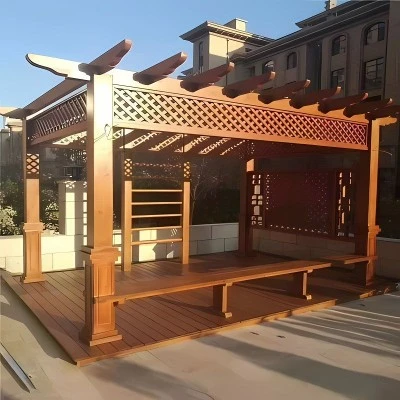
Different types of landscape spaces impose varying requirements regarding structure density. In public activity areas like parks and plazas, the inclusion of amenities such as benches, pergolas, and pavilions can be increased to provide ample space for rest and interaction. In contrast, areas rich in natural scenery call for a reduction in the number of structures to prevent excessive man-made elements from disrupting the existing natural environment. For pathways and pedestrian zones, the placement of structures must ensure sufficient clearance for movement, avoiding interference with pedestrian flow. Judiciously adjusting the spacing between structures allows for the creation of varied spatial effects-ranging from open and semi-open to relatively enclosed environments.
Structure density must also be harmonized with other landscape elements, such as vegetation, water bodies, pathways, and topography. Rather than considering structures in isolation, designers should determine their placement and quantity from the perspective of the landscape space as a whole. For instance, in areas with dense vegetation, large structures might be minimized to allow the natural landscape to serve as the primary visual focus; conversely, in open sites, structures like pavilions and pergolas can be used to create spatial nodes that enhance the landscape's sense of depth and layering. Ultimately, an appropriate density strikes a balance between functional utility, spatial scale, and aesthetic impact, ensuring that structures serve their intended purposes without unduly disrupting the overall landscape environment.